Back| Home |Forward
Where Does the Black Community Stand?
As African Americans, our feelings about sexual orientation vary greatly. But the reality is that our government is NOT allowed to decide for consenting adults what is “acceptable” when it comes to love and intimacy. Those who are lesbian, gay, bisexual, or transgender deserve an honored place in our communities, free from pressure to “assimilate” into heterosexuality or disappear.
There are challenging questions for Black heterosexuals who are uncomfortable with homosexuality:
Can gays and lesbians change?
Information from professionals in the field of mental health tells us that sexual orientation is not a choice like other aspects of our lives, such as the choice of career path or religious membership. The American Psychological Association, along with the American Psychiatric Association and American Counseling Association, issued a statement which represents the consensus among virtually all mainstream healthcare professionals:
"For nearly three decades, it has been known that homosexuality is not a mental illness. Medical and Mental health professionals also now know that sexual orientation is not a choice and cannot be altered. Groups who try to change the sexual orientation of people through so-called 'conversion therapy' are misguided and run the risk of causing a great deal of psychological harm to those they say they are trying to help."
Over the past three decades, groups promising to "heal," "change," or "save" gay, lesbian, bisexual and transgender people from their sexual orientation or gender identity have been striving to build their clout and influence in religious and political circles.
In addition to being inaccurate with respect to the facts that they use to support their position that one can actually change their sexual orientation, these programs have been denounced by every legitimate mental health association as unhealthy and even potentially dangerous for those who enroll. Those claiming to be "Ex-Gays" have every right to state what is in their hearts. What they should not do, however, is use their medically unsupported information to advocate writing discrimination into the California Constitution.
Should I support laws that deny same-sex couples the right to marry?
Refusing to allow a same-sex couple and their children the protections that accompany a marriage license will not serve to convert people to heterosexuality any more than denying Blacks the right to vote or equal access to education has succeeded in obliterating our rich cultural heritage. Changing a constitution to restrict the rights of a group of people will not erase their families. Policies that deny civil rights for gay, lesbian, transgender, and bisexual folk will only serve to create a state of inequality based on personal bias rather than on the principle of reverence for human diversity.
Should a Black woman be discriminated against on the basis of her race, her sex, or the fact that she loves another woman? Must a Black man be stigmatized for the fact that he loves another Black man?
Sexual orientation is an integral aspect of our individual identities: an aspect that we cannot simply cast off as we do our daily garments. Are we prepared to live in a society that punishes its members – not for harming others, but simply for loving “the wrong” person? The call to love is the strongest human urge and love should be a cause for celebration. When two adults love each other deeply, they want to express their feelings. The fact that this love may be for a person of the same sex should not be a source of fear.
Shouldn’t gay people be willing to accept the consequences of their lifestyle choice?
Most gay people argue that they do not have lifestyles, just lives. They do not choose their sexual orientation; they simply choose to live their lives honestly. Even if we entertain the widely debunked notion that sexual orientation is a choice, isn’t choosing who to love the same type of intimate decision as choosing a religion to follow – and does it not thus merit the same protection? In our society there are certain choices that are protected by civil rights legislation, such as the free exercise of religion. One is free to choose the path of Christianity, Islam, or of any faith, and the integrity of the U.S. Constitution must uphold our right to make that choice without fear of discrimination.
How can I accept my family member or friend who has a relationship that I wish he/she did not have?
Often our own truth – clear as it is to us – may contradict that of our loved ones. This is true on matters ranging from religion and economics to sexuality and politics. Compassion allows us to realize that the feelings of others are just as strong and undeniable as ours. Black heterosexual, lesbian, gay, bisexual and transgender individuals have all come to know their own hearts through a process of self-realization. When we recognize that and act with compassion, we are able to build the mutual respect necessary for dialogue.
How can I acknowledge the relationship of a same-sex couple? How should I acknowledge their children?
The decision to commit to building a family with someone does not come easily. Once individuals have made that commitment, pressure to change their hearts and minds can lead to isolation and the cutting of family ties. If we allow personal beliefs about homosexuality to bias us against our loved ones, who is really winning? If we instead extend ourselves with love, we can find an acceptance that renews our relationships and opens the path to dialogue.
If we support gay people, are we condoning the spread of AIDS?
AIDS is a sexually transmitted disease; anyone who engages in unprotected sex or other high-risk behavior can contract HIV, the virus that causes AIDS. Currently, the fastest growing rate of HIV infection in Black communities is of Black women – many of whom are infected through heterosexual contact with Black men. Media hype irresponsibly throws around phrases like “on the down low,” increasing homophobic responses to the crisis of HIV.
It is true that homophobia in the African American community encourages some Black men to remain in the closet and lie to their female partners while engaging in risky sex with other men. When homophobia is diminished and people are able to acknowledge their unions, they will be more likely to form healthy and stable relationships. Marriage – whether between heterosexuals or same-sex couples – promotes monogamy.
Why should we support a lifestyle that we don’t condone?
Our history as African Americans mandates that we be vigilant over the human rights of all people. We cannot afford to allow forces of repression to divide us on the basis of sexual orientation. Unity is essential in our work to empower Black communities. One does not have to “condone” homosexuality to realize that it’s wrong to twist a constitution to take away people’s rights. One does not have to “condone” homosexuality to believe that all children deserve the same family protections – regardless of the sexual orientation of their parents.
As the high court for South African recently explained:
“A democratic, universalist, caring and aspirationally egalitarian society embraces everyone and accepts people for who they are. To penalize people for being who and what they are is profoundly disrespectful of the human personality and violatory of equality. Equality means equal concern and respect across difference. It does not presuppose the elimination or suppression of difference. . . . The acknowledgement and acceptance of difference is particularly important in our country where for centuries group membership based on supposed biological characteristics such as skin colour has been the express basis of advantage and disadvantage. . . .
Accordingly, what is at stake is not simply a question of removing an injustice experienced by a particular section of the community. At issue is a need to affirm the very character of our society as one based on tolerance and mutual respect. The test of tolerance is not how ones finds space for people with whom, and practice with which, one feels comfortable, but how one accommodates the expression of what is discomfiting.” (Fourie v. Minister of Home Affairs (South African Const. Ct. 2005) Const. Case No. 60/04, at 38-39).
Mervyn Dymally
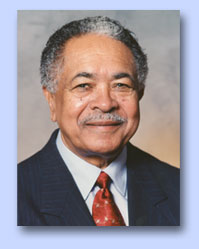
“I support equal rights for Gays and Lesbians”
-Mervyn Dymally
http://www.glaad.org/publications/archive_detail.php?id=3572&PHPSESSID;=f
rrrrrrrrrrrrrcom/newsletter.php/3tp://www.whygaymarriage.com/newsletter.php/ffgggg
quotes by assemblyman Dymally